If you’re planning to work, study, or apply for professional registration abroad, you may be asked to provide a notarised copy of your UK degree certificate. This is a common requirement for visa applications, foreign employment contracts, university admissions overseas, and professional licensing bodies in many countries.
Understanding the notarisation process for educational documents can save you considerable time and help you avoid costly mistakes that might delay your international plans. In this guide, we’ll explain when and why you need your degree notarised, the steps involved, and how to ensure your documents are properly authenticated for use in your destination country.
Why Do You Need to Notarise Your UK Degree Certificate?
Many countries require proof that your educational qualifications are genuine before they’ll grant you a work visa, accept you into a postgraduate programme, or allow you to practise a regulated profession. Notarisation provides an official verification that your degree certificate is a true copy of the original document.
Common situations where you might need a notarised degree certificate include:
- Applying for skilled worker visas in countries such as the UAE, Saudi Arabia, China, or Qatar
- Seeking professional registration (for example, as a doctor, nurse, engineer, or teacher) in another country
- Enrolling in postgraduate courses at universities abroad
- Submitting credentials to foreign employers as part of the hiring process
- Applying for permanent residency or citizenship in certain jurisdictions
- Meeting requirements for mutual recognition agreements in regulated professions
The notarisation process confirms that the copy you’re presenting matches the original document, and that it has been certified by a qualified legal professional. In many cases, this notarisation must then be further authenticated with an apostille or consular legalisation, depending on your destination country.
Understanding the Difference: Notarisation, Apostille, and Legalisation
These terms are often used interchangeably, but they refer to different stages of document authentication:
Notarisation
A notary public verifies your identity, confirms that you hold the original degree certificate, and certifies that the copy is a true likeness of the original. The notary will add their signature, seal, and official stamp to the certified copy.
Apostille
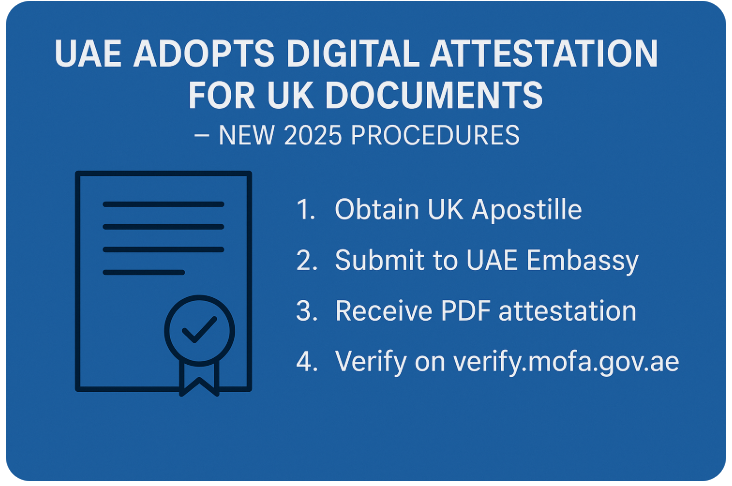
An apostille is an additional certificate issued by the UK Foreign, Commonwealth & Development Office (FCDO) that authenticates the notary’s signature and seal. This is required for documents being used in countries that are party to the 1961 Hague Apostille Convention. Most popular destinations including Australia, Spain, the UAE, and the USA are part of this convention.
Consular Legalisation
For countries that are not part of the Hague Convention (such as the UAE for certain document types, Qatar, and some others), you may need consular legalisation. This involves additional authentication by the relevant embassy or consulate in London after the FCDO apostille has been obtained.
Your destination country, employer, or educational institution will normally specify exactly what level of authentication is required. It’s important to clarify this before beginning the process to avoid unnecessary steps or having to repeat the procedure.
What Documents You’ll Need
To have your UK degree certificate notarised, you should prepare the following:
- Original degree certificate: The notary must see the original document to certify a copy. Bring the actual certificate issued by your university, not a photocopy.
- Photo identification: A valid passport or UK driving licence to confirm your identity.
- Proof of address: A recent utility bill, bank statement, or council tax bill (usually dated within the last three months).
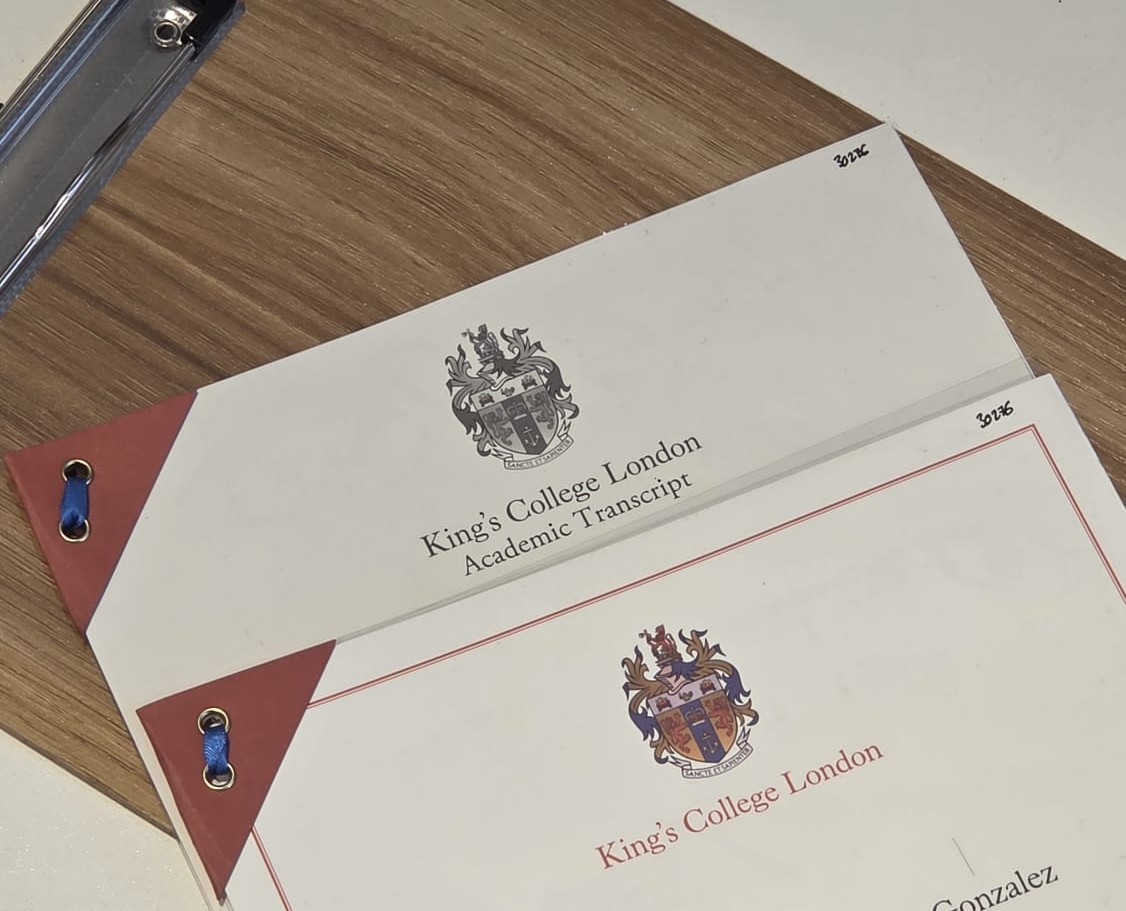
- Academic transcript (if required): Some institutions also ask for notarised copies of your academic transcript showing your grades and modules.
- Any specific forms: Certain countries or organisations provide their own attestation forms that must be completed alongside the notarisation.
If your original degree certificate has been lost or damaged, you’ll need to request a replacement from your university before proceeding. Notaries can only certify copies of original documents, not photocopies or digital versions printed from email attachments.
The Notarisation Process: Step by Step
Step 1: Confirm What’s Required
Contact the organisation or authority that’s requesting the notarised degree. Ask specifically whether they need:
- A notarised certified copy only
- A notarised copy with an FCDO apostille
- Consular legalisation in addition to the apostille
- Translation into another language (if your degree is in English but the destination country requires a certified translation)
Step 2: Arrange an Appointment with a Notary Public
Unlike solicitors, notaries public are specialist lawyers with specific expertise in authenticating documents for international use. You can search for a notary in your area or use a notary service that operates across the UK.
Many notary services now offer flexible appointment options, including mobile notary visits to your home or office, video-verified remote services for certain documents, and weekend or evening appointments to suit your schedule.
Step 3: Attend Your Notary Appointment
Bring all the documents listed above. The notary will:
- Verify your identity using your passport or driving licence
- Examine your original degree certificate
- Prepare a certified copy, often with a formal notarial certificate attached
- Apply their official seal and signature
- Record the transaction in their official register
The appointment typically takes 15 to 30 minutes, though this can vary if multiple documents need certifying or if translations are involved.
Step 4: Obtain an Apostille (If Required)
If your destination country requires an apostille, the notarised document must be sent to the FCDO Legalisation Office in Milton Keynes. You can do this yourself or ask your notary to arrange it on your behalf.
The FCDO offers different service levels:
- Standard service: Usually processed within five working days
- Premium same-day service: Available for urgent applications at an additional cost
Many notaries, including iNotary Public, can manage the entire apostille process for you, saving you time and ensuring the documents are handled correctly throughout.
Step 5: Consular Legalisation (If Required)
For certain countries, after the FCDO apostille has been obtained, the document must be presented to the relevant embassy or consulate in London. Each embassy has its own procedures, fees, and processing times.
Your notary can advise on whether this step is necessary and may be able to arrange this on your behalf through established networks with legalisation agencies.
Common Mistakes to Avoid
Not Checking Requirements in Advance
Different countries and organisations have different requirements. What works for a visa application to Australia may not be sufficient for professional registration in the UAE. Always confirm the specific requirements before starting the process.
Using a Photocopy Instead of the Original
Notaries cannot certify copies of copies. You must present the original degree certificate issued by your university. If you’ve lost it, contact your university’s graduation office to request a replacement.
Leaving It Too Late
The full process—from notarisation through to consular legalisation—can take two to three weeks or longer, depending on embassy processing times. Factor in potential delays and start the process well before your deadline.
Forgetting About Transcripts
Many institutions require both your degree certificate and your academic transcript to be notarised. Check whether you need both to avoid having to repeat the process.
Not Considering Translation Requirements
If your documents will be used in a non-English-speaking country, you may need a certified translation. This should be done by a qualified translator, and the translation itself may also need to be notarised.
How Long Does the Process Take?
The timeline depends on which level of authentication you need:
- Notarisation only: Can often be completed within one to three working days, depending on notary availability
- Notarisation plus apostille: Typically one to two weeks using standard FCDO service
- Full legalisation including consular stamps: Two to four weeks, depending on the specific embassy’s processing times
If you have an urgent deadline, premium and same-day services may be available at additional cost. It’s always advisable to begin the process as early as possible to avoid last-minute stress.
What Are the Costs Involved?
The total cost will depend on several factors:
- Notary public fees (these can vary but typically range from £50 to £150 per document, depending on complexity)
- FCDO apostille fee (currently £30 per document for standard service, more for premium)
- Consular legalisation fees (these vary significantly by country)
- Courier or postal costs if documents need to be sent to the FCDO or embassies
- Translation fees if required
Many notary services offer package prices that include notarisation and apostille handling, which can be more cost-effective than arranging each step separately.
Can You Notarise a Digital or Scanned Copy?
Generally, no. Notaries must see and verify the original physical document. Some universities now issue digital degrees or digital credentials, but acceptance of these for notarisation purposes is still limited and depends on the specific requirements of the destination country.
If you only have a digital copy of your degree, contact your university to request an official printed certificate before booking a notary appointment.
What If Your Degree Is From a Foreign University?
If you studied abroad but now live in the UK and need your foreign degree notarised for use in a third country, a UK notary public can still help. The process is similar: the notary will certify that the copy matches the original you present, and this can then be apostilled by the UK FCDO if required.
However, some countries may require that educational documents be authenticated in the country where they were issued. It’s important to check the specific requirements with the requesting authority.
How iNotary Public Can Help
At iNotary Public, we specialise in providing efficient, professional notarisation services for UK degree certificates and other educational documents. Whether you need a simple certified copy or a fully legalised document ready for use abroad, we can guide you through the entire process.
Our services include:
- Clear advice on what level of authentication your destination country requires
- Notarisation of degree certificates, academic transcripts, and professional qualifications
- Apostille handling with the FCDO on your behalf
- Assistance with consular legalisation arrangements
- Mobile notary services across London and the UK for your convenience
- Fast turnaround times to meet urgent deadlines
We understand that dealing with international document requirements can be confusing and time-consuming. Our experienced notaries will ensure your documents are correctly prepared and authenticated, giving you confidence that your qualifications will be accepted wherever you need them.
Final Thoughts
Having your UK degree certificate notarised is a straightforward process once you understand what’s required. The key is to start early, confirm the exact requirements of your destination country or organisation, and work with a qualified notary public who can guide you through each step.
Whether you’re embarking on an exciting international career, pursuing further education abroad, or seeking professional registration in another country, properly authenticated educational documents are essential. With the right preparation and professional support, you can ensure your qualifications are recognised and accepted wherever your ambitions take you.
If you need assistance notarising your UK degree certificate or any other educational documents, the team at iNotary Public is here to help. Contact us today to discuss your requirements and book an appointment at a time and location that suits you.