Clients ask me this question almost every day, and it’s a major source of confusion for anyone dealing with official documents. Although requirements can vary depending on who will receive your document, the guide below provides a reliable rule of thumb.
When Do You Need Certification?
If your document is being used within the UK, it typically requires a Commissioner for Oaths certification.
This is a straightforward process where your document receives a certification stamp confirming its authenticity.
When Do You Need Notarisation?
If your document is going to be used abroad, it will usually require full notarisation by a Notary Public.
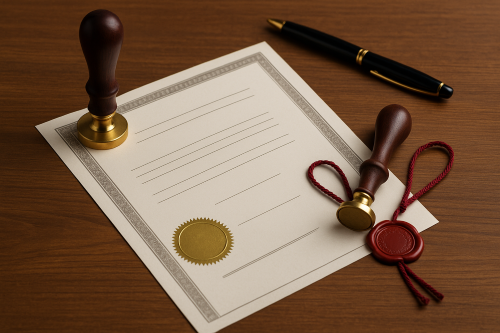
Notarised documents include both a stamp and the traditional red notarial seal, and they are signed by me in my capacity as a Notary Public.
This higher level of verification is recognised internationally and is often essential for overseas authorities.
Certification vs Notarisation – What’s the Difference?
- Certification: Stamp only
- Notarisation: Stamp + red seal
Both processes involve my signature, but under different legal capacities.
“My Document Says It Can Be Signed by My Accountant or Solicitor…”
If your document states that a solicitor or accountant can sign it, this usually means the document is intended for use in the UK, where these professionals may certify documents as Commissioners of Oaths.
A Notary Public, on the other hand, acts as a Commissioner for Oaths.
For clients, this distinction makes no practical difference—both types of professionals can certify UK-bound documents.
Always Check the Requirements Before You Book
Before choosing certification or notarisation, confirm with the receiving organisation (such as a foreign embassy, university, government office, or employer) what level of verification they require.
This simple step can save you time and unnecessary expense.